

Tom Stewart: The Recovery Routine Behind AFL Longevity
At the highest level of AFL football, performance is measured on game day, but much of the work happens in the hours between sessions. For Geelong defender Tom Stewart, after years of elite competition, recovery has become a key part of staying ready. His home setup brings ice bath recovery and home sauna recovery into the same space, giving him access to both cold-water immersion and heat as part of a routine built around preparation, consistency and longevity.
It is a different kind of performance mindset. Not simply pushing harder, but understanding when the body needs to reset, slow down, and prepare to go again.
Key Takeaways
-
Tom Stewart’s recovery routine combines ice bath recovery and home sauna recovery to support preparation and long term AFL performance.
-
Cold-water immersion gives him a focused reset after demanding training or competition.
-
Sauna recovery helps him slow down and create space for rest between high intensity sessions.
-
His setup shows that recovery works best when it is consistent, accessible, and flexible enough to match the demands of each day.
What Longevity Demands at AFL Level
A long AFL career is built across far more than match days.
There are pre-seasons, strength sessions, running loads, contact work, travel, recovery days, and the weekly physical demands of competition. For a defender like Tom, the demands are constant: repeated accelerations, changes of direction, aerial contests and body contact, followed by the need to recover and be ready to go again.
That repetition is what makes longevity such a meaningful part of elite sport.
Experience changes the conversation around performance. When an athlete has spent years operating at AFL level, preparation is no longer only about what can be added to training. It is also about managing the work already being done and creating enough space for the body to recover between demanding sessions.
Tom’s approach reflects that balance. Training remains essential, but so does what happens afterwards.
Recovery is not separate from performance. Over the course of a season, it becomes one of the routines supporting it.
Recovery Changes as Experience Builds
Early in an athletic career, progress can often feel connected to doing more. Another session, another set, another opportunity to improve.
Experience can bring a different perspective.
The longer an athlete competes, the more important it becomes to recognise what the body needs on a particular day. Sometimes that means another demanding training session. Other times, it means stepping away from intensity and prioritising recovery.
That does not make the work easier. It makes it more deliberate.
For experienced athletes, recovery can include several simple habits working together:
-
prioritising sleep, nutrition and hydration around training demands
-
using mobility, downtime, and recovery tools to transition out of high-intensity sessions
-
creating repeatable practices that can fit around changing weekly workloads
That last point matters.
The most sophisticated recovery protocol is not necessarily the most useful one if it is difficult to maintain. What matters across a long season is having practices that can become part of normal life.
Tom’s home recovery space is built around that idea.
Building a Recovery Space at Home
The defining image from Tom’s Masseuse Health Co. setup is not one individual product. It is the two sides of recovery sitting together.
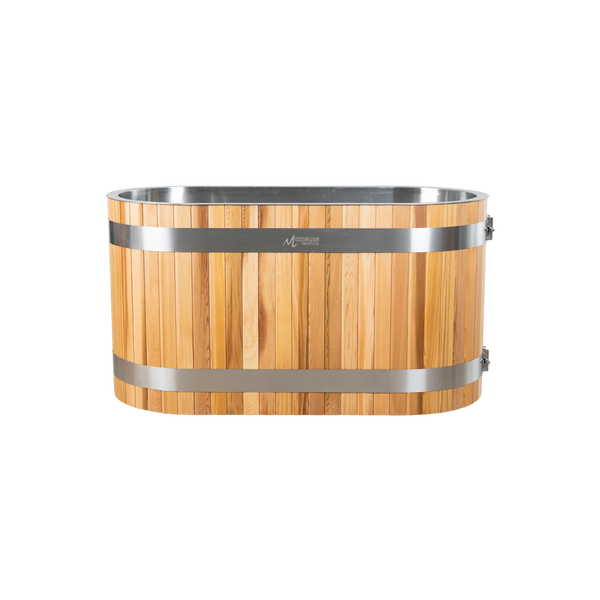
On one side is the Niseko Ice Bath. On the other is the EverGlow Traditional Sauna.
Together, they create a dedicated space where Tom can move between cold-water immersion, heat, and simple downtime without relying entirely on recovery facilities elsewhere.
That changes the relationship with the routine.
When cold and heat are already available at home, recovery requires less organisation. There is no need to turn every session into a separate event. It can happen around training, family life, and the changing demands of an AFL week.
That accessibility can be particularly valuable during a long season. Some days may be physically demanding. Others may involve lighter training, travel, or preparation. Having more than one recovery option makes it possible for the routine to change with the day.
It also reflects something that becomes increasingly important with experience: recovery does not always need to look the same.
Cold for the Reset
Cold-water immersion asks for attention.
There is very little passive about stepping into an ice bath. The initial cold demands controlled breathing, composure, and the willingness to stay present while the body adjusts.
For Tom, the Niseko Ice Bath forms the cold side of his home recovery environment. The dedicated setup means cold-water immersion can be readily available rather than something that needs to be recreated with bags of ice whenever the moment calls for it.
At the elite level, cold-water immersion is commonly used around demanding training and competition as part of broader recovery strategies. Depending on the athlete, session, and protocol, it may be used with the aim of managing perceived soreness and helping create a sense of physical reset after hard work.
That context is important.
An ice bath is not the reason an athlete performs at an elite level. It sits alongside training, nutrition, sleep, mobility and load management. The value comes from having another recovery option that can fit naturally into the bigger picture.
For athletes interested in improving post-workout muscle repair, the broader lesson is that recovery is rarely about one isolated intervention. It is about what happens across the hours and days after training.
Tom’s cold-water routine fits within that larger system.
Heat for the Slow Down
If the ice bath represents a sharp reset, the sauna changes the pace.
The cold side of the routine is focused and deliberate. Inside the sauna, the energy shifts. Tom can sit back, slow down, and let the recovery period feel like recovery.
That contrast gives heat its own role.
Sauna use does not need to replicate the intensity of training. Part of its value within a home routine is simply creating a dedicated environment for warmth and downtime.
For someone whose working week revolves around physical preparation, competition and performance, having a place designed specifically for slowing down can be useful in its own right.
The EverGlow Traditional Sauna also gives Tom another recovery option when cold exposure may not be what he wants from that particular session.
That flexibility is important because recovery needs can change. A hard football session may create a different feeling from a lighter training day. A match day may be different again. The body does not operate from one fixed template, so the recovery routine does not necessarily need to either.
Heat gives Tom another way to transition away from the competitive environment and into a quieter part of the day.
Where Heat and Cold Come Together
This is where Tom’s setup becomes distinctly different from a standard ice bath routine.
With both cold and heat available in the same home environment, he has the flexibility to use one or incorporate both depending on what suits the day.
The concept is often described as contrast therapy, where cold and heat are used within the same broader recovery practice. The exact approach can differ significantly between individuals, so it is not about prescribing one universal sequence or timing protocol.
Instead, the value of Tom’s setup is choice.
His home recovery space can support:
-
cold-water immersion when he wants a more deliberate physical reset
-
sauna time when warmth, relaxation, and slowing down better suit the moment
-
a combination of heat and cold when both have a place within the broader routine
That makes recovery more adaptable.
Rather than forcing every training day into the same protocol, the environment gives Tom options. He can respond to how the week is unfolding and what his body needs around that workload.
It is also a useful principle for anyone developing a daily recovery routine. Consistency does not require doing the same thing every day. It means creating a framework that is simple enough to return to while still allowing the routine to change when needed.
Consistency Over Complexity
Elite sport is shaped by small routines.
Some happen before training. Others take place immediately afterwards. Many are barely visible from the outside.
Over time, these routines help reduce the number of decisions an athlete needs to make. Preparation becomes familiar, and recovery becomes easier to repeat.
Tom’s home setup follows the same principle.
Having an ice bath and sauna at home means he can use them when they suit his schedule without turning recovery into a complicated event. They are simply available when he feels they have a role to play.
This removes friction from his routine. Across a long AFL career, that sense of familiarity can be more useful than constantly changing his approach.
For Tom, the value lies in having reliable recovery practices that fit naturally around the ongoing demands of professional football.
The Work Between the Work
For Tom Stewart, longevity at AFL level has required more than the ability to perform when the ball is bounced. It has required years of preparation, adjustment, and learning how to manage the space between one physical demand and the next.
His home recovery setup reflects that experience.
Cold and heat play different roles. The ice bath offers a more deliberate reset, while the sauna creates room to slow down. Together, they give Tom a recovery environment that can change with the demands of his training and competition schedule.
For athletes and active people considering ice bath recovery, the lesson from Tom’s approach is not that cold needs to become the centre of every routine. It works best as one part of a broader system built around consistency.
The same applies to home sauna recovery. Heat can offer a different experience and a different pace, giving the recovery routine another option when it is time to step away from intensity.
Ultimately, Tom’s setup is a reminder that staying at the top is not only about knowing when to work harder.
It is also about knowing how to recover from the work already done.
Because after years at the highest level, recovery is not time away from performance. It is part of staying ready for what comes next.
Explore our products

Explore Editorial Content


